As Mysterious Coronavirus Spreads, An Infectious Disease Expert Explains What You Should Know - UCSF News Services
As Mysterious Coronavirus Spreads, An Infectious Disease Expert Explains What You Should Know - UCSF News Services |
| Posted: 24 Jan 2020 11:40 AM PST 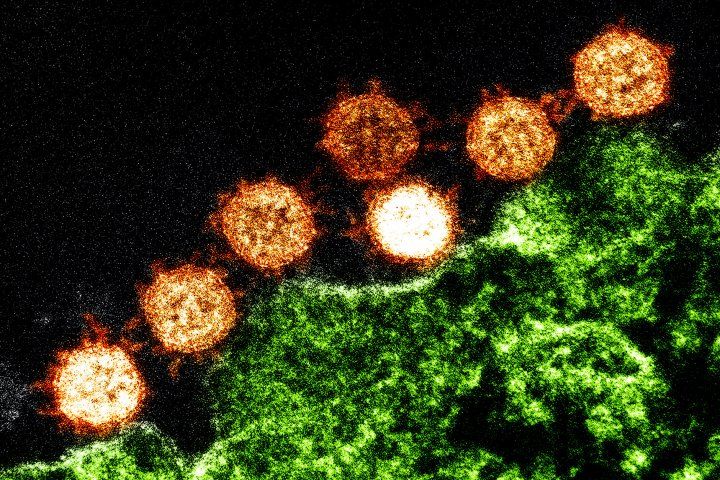 A new coronavirus, related to the SARS and MERS diseases that have caused epidemics, has been discovered in China and started to spread. Just weeks since the viral illness was first reported in Wuhan, China, health experts globally are working on containing and treating it. As of Jan. 24, it has killed several dozen people and sickened more than 900. Cases have now been reported in individuals who traveled to Wuhan and returned to other countries, including Taiwan, Vietnam, Japan, Thailand, South Korea, Singapore and the United States. To put the latest news in context, we asked UC San Francisco infectious disease expert Charles Chiu, MD, PhD, about the origins of the Wuhan virus and public health risks going forward. What do we know about the mysterious new virus that appeared in Wuhan? This is a new virus. The initial cases came from the city of Wuhan in association with exposure to a seafood market. The virus has been identified, cultured, and sequenced. In fact, there are now 24 complete genomes of the virus, which are publicly available. And what the genome analysis suggests is that this is a relative of the SARS and MERS coronaviruses as well as other known human coronaviruses. What is a coronavirus? Coronavirus is a family of viruses that causes the common cold, but the spectrum of disease can range from the common cold to severe life-threatening pneumonia. They're named for the spike proteins on the surface of the virus that make the virus look like a crown or star. There are seven coronaviruses that are known to infect humans. The emergence of two of these coronaviruses, SARS in 2002 and MERS in 2012, occurred as a result of animal-to-human, or zoonotic, transmission events. The same is likely true for the new coronavirus from Wuhan, which has been officially named 2019-nCoV by the World Health Organization. SARS, MERS, and 2019-nCoV are all associated with human-to-human transmission. How dangerous is the new virus? There are two key questions we need to address before we can really understand how widely this virus is going to spread and how much of a threat it poses. The first question is what's the animal reservoir for the virus? Nearly all coronaviruses are thought to originate from bats, and the genome sequence of 2019-nCoV is 96 percent identical to the sequence of a bat coronavirus. However, bat-to-human transmission is thought to be exceedingly unlikely. The zoonotic "jump" from animals to human usually occurs through an intermediate animal reservoir. In the case of SARS, it was the civet, which was a cat-like animal that was used for consumption in the animal markets in China. With MERS, it was camels. Coronaviruses in general are thought to be transmitted through respiratory droplets, contact with infected secretions, and fecal-oral transmission – you don't necessarily have to eat an infected animal, and the infected animal can be asymptomatic. The other key question is the efficiency of human-to-human transmission. SARS is more efficient at spreading from person-to-person than MERS, for example. Right now, we don't know the transmission efficiency for the new virus. A case was reported from China where one patient apparently infected 14 health care workers at the hospital, and it's possible that some patients, known as super spreaders, are more infectious than others. We don't know whether that particular patient was a super spreader or whether this reflects the fact that this virus is already very efficient at human-to-human transmission. Until we know, we have to make the assumption that this is a virus that spreads quite efficiently, which is why there are now mandatory screenings at airports and enhanced monitoring in local hospitals here for possible cases of 2019-nCoV infection. Will this virus mutate? The virus has already likely mutated to acquire the capacity to "jump" from animals to humans and to be transmitted person-to-person. Since this is an RNA virus, it will continue to mutate as long as it continues to circulate in humans. Additional mutations as the virus adapts to the human host may make the virus less severe or more severe, or less or more efficient in spreading. It's too early to tell what will happen, which is why ongoing surveillance by sequencing virus genomes is so important. Are there tests to screen for the new virus? This virus is different enough that the common coronavirus tests used clinically cannot detect it, meaning that new and accurate diagnostic tests to detect this virus are urgently needed. The Centers for Disease Control and Prevention (CDC) has a PCR (polymerase chain reaction) laboratory test for specifically detecting this virus that can be done in four hours, and plans are to rapidly disseminate this test to state and local public health laboratories. Just two weeks ago we published a paper in Nature Microbiology on a metagenomic sequencing technique that enables you to rapidly identify virtually every RNA viral pathogen, including Zika virus, West Nile virus, Ebola virus, Marburg, Lassa, yellow fever, influenza, any virus. We are currently adding 2019-nCoV to our list of viruses that we can detect. It's quite rapid – the entire procedure can be done under six hours. We are seeking to work with public health laboratories in California to deploy this metagenomic sequencing test for monitoring 2019-nCoV and sequencing the genome of any cases that are identified. What are the signs of having this coronavirus infection? Based on the reports, the symptoms of respiratory infection from 2019-nCoV are very similar to those from other coronaviruses: nasal congestion, headache, cough, sore throat and a fever. In some patients, these symptoms can worsen into pneumonia, with chest tightness, chest pain, and shortness of breath. If you're elderly, immunocompromised, or if you have other comorbidities such as heart disease, liver disease, you are at higher risk of developing severe pneumonia and dying from the disease. How long would it take for symptoms to appear after infection? Again, we don't really know about the incubation period for this virus, but I can tell you that for coronaviruses in general, the incubation period is thought to be two to 10 days, with a median period of five days. The incubation period is extremely unlikely to be longer than two weeks. So it sounds like there are still many unknowns about this virus. That's correct, I would like to stress that there's a lot about this virus we don't know at this point in the outbreak. However, we do know that there's very little diversity in the genome sequence. The 24 viral genomes that have been sequenced, some from China, others from Japan and Thailand, are nearly identical. What that means is that the actual zoonotic animal-to-human transmission event occurred very recently, and that China may have detected it very early in the course of the outbreak. We also know that there are documented cases of human-to-human transmission as shown by the hospital-acquired cases, and evidence of sustained cycles of transmission, as evidenced by secondary infections in household members who were not exposed to the markets from which the initial cases originated. We also know that there have been deaths from this virus, the majority in older men with underlying health problems, but also in a healthy young man. So it's definitely something to worry about. |
| Flu season and home remedies in P.E.I.'s bygone days - CBC.ca Posted: 26 Jan 2020 04:00 AM PST Reginald (Dutch) Thompson's column The Bygone Days brings you the voices of Island seniors, many of whom are now long-departed. These tales of the way things used to be offer a fascinating glimpse into the past. Every second weekend CBC P.E.I. will bring you one of Dutch's columns. Sometimes in the bygone days 100 years ago or more on P.E.I., the cure for the flu sounded worse than the affliction —remedies like turpentine and cow manure were not uncommon. Back then you didn't go running off to the drugstore looking for quick chemical fixes for coughs, aching joints and runny noses. Instead, mothers and grandmothers had the salvation needed from the flu right at home, and every family had variations of certain home remedies. One very popular cure for the flu, colds and pneumonia were turpentine and kerosene: sometimes applied externally and sometimes internally.  Turpentine and goose greaseA few drops of turpentine or kerosene on a teaspoon of sugar was one home remedy. "The main medicine then in them days was either a dose of [epsom] salts, or if you got wounded somewhere or other it was always kerosene oil, and wrap it up," said Milton Buell from Abney in eastern P.E.I., near Murray River. "If you had a bad cough too, it'd be kerosene oil and sugar." His mother would feed him five or six drops of kerosene on a half-teaspoon of sugar.  "It didn't taste too bad," Buell said. Turpentine and kerosene were often mixed with various things to use externally, too: onions, garlic, and another favourite home remedy ingredient — goose grease. "They would rub your chest with goose grease and a little bit of turpentine, I believe, at that time," said Kay Wood from Victoria. "That was guaranteed to take the hair off your chest!" Grease saved while butchering a goose would be saved and mixed with camphor oil, oil of wintergreen or cod liver oil. A good stiff drinkEven doctors on P.E.I. practised some home remedies of their own. Dr. MacLean in Souris made his own remedy for the Spanish flu of 1918-1919 — his own special tonic. Robbie Robertson's family of 14 children took it every morning and it seemed to work, Robertson said. Down in Murray River, Dr. Brehaut chewed tobacco to ward off the flu. Many people thought if you chewed tobacco and drank rum you wouldn't catch the flu.  And sometimes a good stiff drink helped cure the flu. Although liquor was tightly controlled on P.E.I. for much of the last century, certain retail vendors were allowed sell to any person presenting a prescription 24 ounces of wine or spirits or 12 quarts of ale "not oftener than once a day," according to the history of liquor on the P.E.I. government's website. However, this quantity could be doubled if the person lived more than 10 miles from the vendor. These prescriptions came to be known as "scripts," and were written by doctors.
An interesting sidebar: people were not able to freely buy liquor on P.E.I. until 1967, when the law was changed to finally abolish permits that had been required to buy it. Some people claimed a snort of moonshine and chew of twist tobacco also did the trick of warding off the flu. Another piece of advice was "don't stand in a doorway or you'll catch the flu." That old adage was often repeated — people believed doorways were where germs are most prevalent. Mustard plaster on the chestIf there was congestion in the chest with the cold or flu, you may have been administered a mustard plaster, which was a popular home remedy until fairly recently.  They were a mixture of one-third flour and two-thirds dry mustard, mixed with hot water into a thick paste then applied to the chest or back and covered with a cloth. Sometimes goose grease or onions were added too. Dorothy Palmer trained as a nurse in the 1920s. "But nursing was nothing like it is today," she explained. She was instructed to administer mustard plasters every four hours to patients who had pneumonia, along with lots of fresh air from an open window no matter the weather. "And you just slapped them on for 20 minutes then left them, then in four hours you had to slap them on again," Palmer said. "That was the only treatment we had. Sometimes they got better and sometimes they didn't." And for a fever?One old Maritime cure for a fever was an application of warm cow manure, fresh from the cow. Others went with salt herring.  Amy Bryanton from Spring Valley lived to be 104. She told Dutch about one cold she had at the age of four or five. "We had neighbours just lived across the field from us," she said. "Jake Duggan and the wife, Ellen. Somewhere or other they had heard that I was sick with the cold. So Mrs. Duggan told mum to take a salt herring and split it and put one on each foot, tie it on each foot, to take the fever down." That's exactly what her mother did, but then they had to carry Bryanton anywhere she wanted to go, because she had herring tied to her feet. Salt herring had almost magical healing powers as a home remedy — people wrapped it around their necks to cure a bad cough, as well as salt pork. As smelly as that sounds, it was an alternative to one even smellier cure. In Britain, people were given horse dung water: a mixture of horse manure, ginger, molasses and other spices, Dutch reports.  More P.E.I. news |
| You are subscribed to email updates from "chest congestion" - Google News. To stop receiving these emails, you may unsubscribe now. | Email delivery powered by Google |
| Google, 1600 Amphitheatre Parkway, Mountain View, CA 94043, United States | |
Comments
Post a Comment